
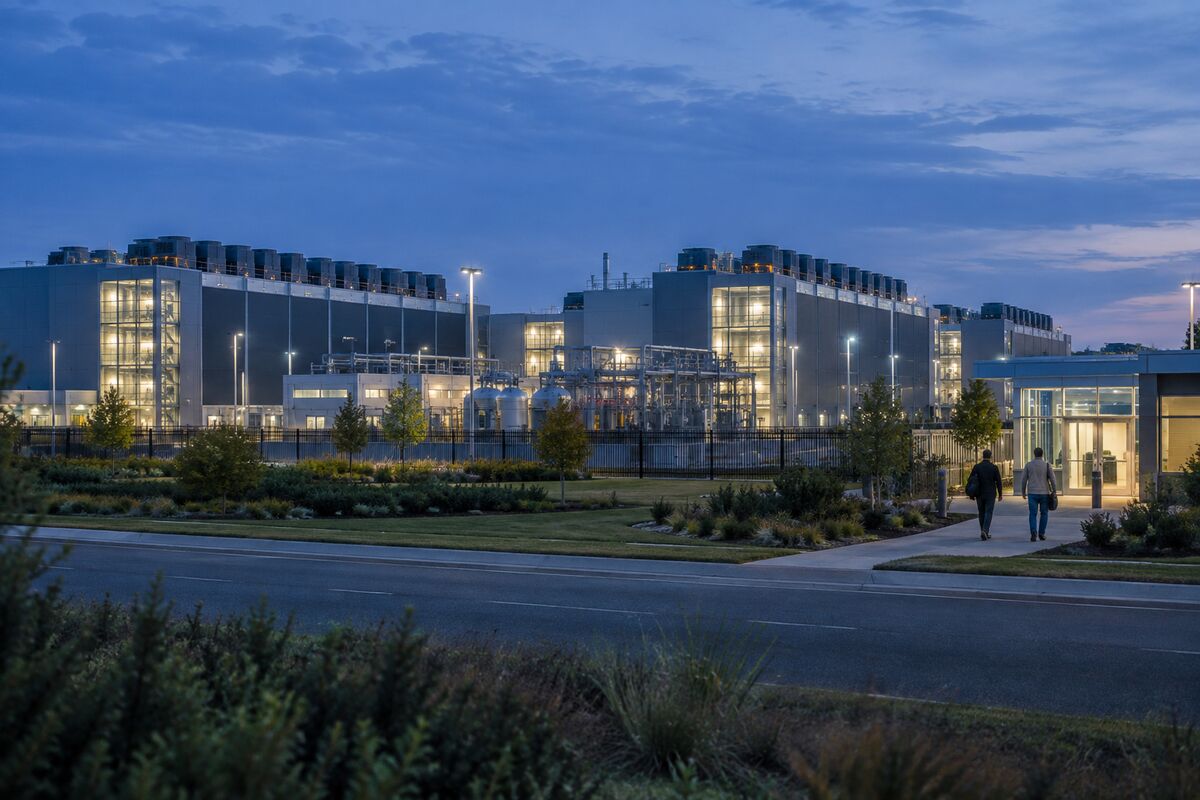
AI infrastructure has been one of technology’s grandest promises—and one of its most expensive wagers. Now, a 30% plunge in a Korean IPO is sending another jolt through US-listed data-center and neocloud stocks, forcing investors to revisit how much optimism may already be embedded in the sector.
The immediate market message is less about one overseas listing than about appetite. When a company associated with the broader AI infrastructure story suffers such a sharp debut setback, it may raise uncomfortable questions for US data-center plays: Are valuations assuming too much? Can enormous buildout costs be supported for long enough? And how quickly can caution spread across a sector that has been treated as a central beneficiary of the AI boom?
Data-center stocks and neocloud stocks fell again following the Korean IPO’s 30% plunge, according to CNBC’s report. The renewed weakness arrives after the sector’s troubles during the prior week, giving the move a more persistent feel than a single-session wobble.
One IPO, a wider test of risk appetite
For US-listed AI infrastructure companies, the significance of the IPO decline lies in what it may signal about risk appetite. Markets do not always need a direct connection between companies to draw comparisons. If investors begin to treat the Korean listing as evidence that enthusiasm for AI infrastructure is cooling, sentiment may weaken across related US technology names—even when the businesses, markets and financial profiles differ.
That is the potential contagion risk hanging over major US data-center plays. The sector’s appeal rests on the prospect of sustained demand for computing capacity, but the market’s willingness to finance that expansion is just as important. A shift from enthusiasm to scrutiny could make investors more sensitive to valuation, funding needs and the pace at which expensive facilities can become economically productive.
The capital-intensity problem
AI buildouts are not lightweight software projects. They require substantial physical infrastructure, including data centers and the supporting systems needed to operate them. That capital-intensive character can magnify both optimism and anxiety. When sentiment is strong, large spending plans may be interpreted as preparation for enormous future demand. When sentiment turns cautious, the same spending can prompt questions about financing, execution and the timing of returns.
The latest decline therefore presents a valuation problem as much as a trading problem. Elevated valuations may leave less room for disappointment if growth expectations soften or capital requirements rise. The 30% IPO plunge does not, by itself, establish that US AI infrastructure companies face the same outcome. It may, however, encourage a tougher examination of the assumptions supporting the sector.
Why the prior week matters
Because data-center and neocloud stocks were already troubled during the prior week, the latest slide could reinforce a narrative of deteriorating sentiment. Repeated weakness may cause market participants to look beyond the immediate headline and assess whether the group’s enthusiasm has become too concentrated around the AI theme.
That does not settle the long-term outlook for US technology infrastructure. It does indicate that the market is becoming more alert to the gap between AI ambition and the capital required to build it. For now, the Korean IPO rout is acting as a warning flare: not proof of a sector-wide breakdown, but a reminder that high expectations can make infrastructure stocks especially vulnerable when risk appetite cools.
Bull/Bear Verdict
Bull Case: The 30% Korean IPO decline may prove to be a sentiment shock rather than a verdict on US AI infrastructure, leaving room for the sector’s long-term demand narrative to remain intact.
Bear Case: The 30% plunge, combined with troubles during the prior week, may deepen concerns that elevated valuations and capital-intensive AI buildouts leave US data-center and neocloud stocks exposed to further sentiment contagion.