
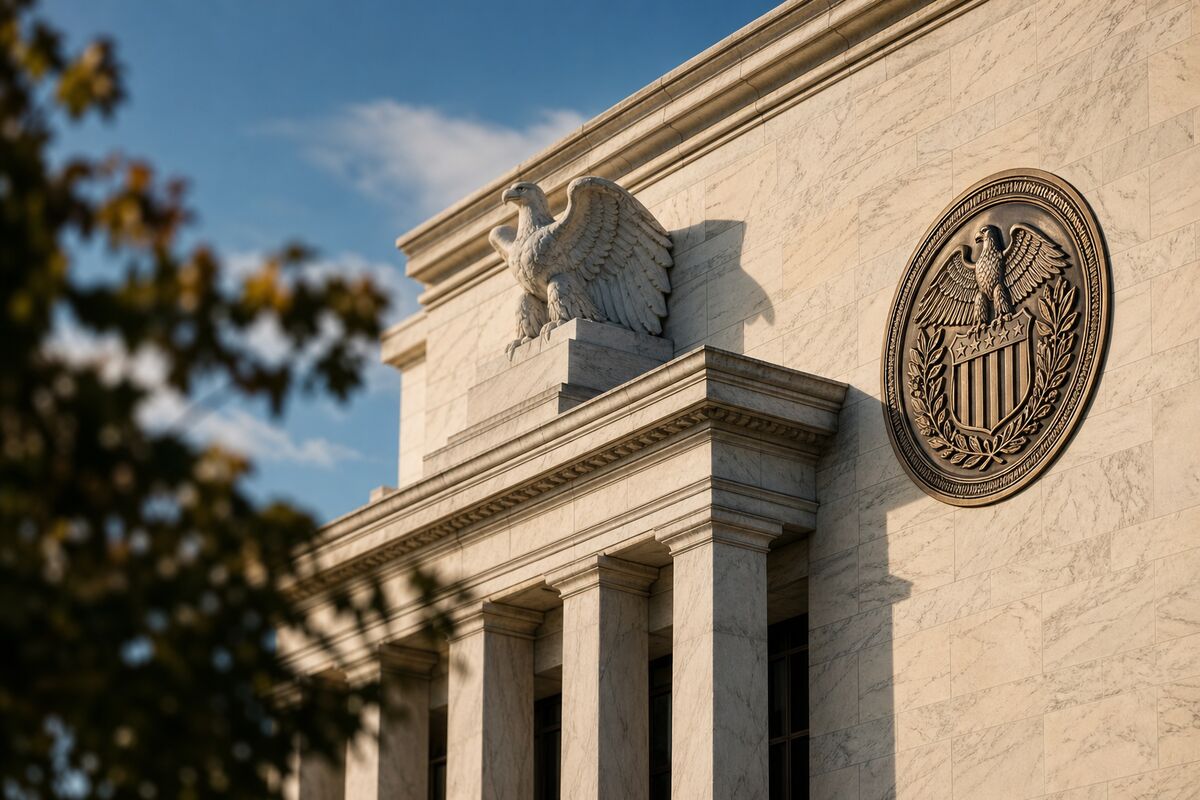
Wall Street’s year-end debate now has a new complication: the Federal Reserve is not merely watching inflation in the rear-view mirror. Its October meeting minutes show officials expected more rate hikes, while also considering whether artificial intelligence could become part of the inflation story.
That combination puts investors in an awkward place. The Fed held its benchmark rate in a range of 3.75% to 4% at the October meeting, but the minutes carried a message that the policy path may not be finished. For rate-sensitive stocks, the issue is not only where rates stand today. It is whether the market has been too eager to assume that the next move will eventually be lower.
The Federal Reserve’s October minutes, as reported by CNBC, showed officials expected more rate hikes and expressed concern about AI’s potential impact on inflation. That is a notable pairing. Monetary policy is already restrictive by design, while AI is usually discussed as a productivity and technology story. The minutes suggest it may also belong in the inflation conversation, at least as a risk officials are weighing.
Why a higher-for-longer outlook matters for valuations
Equity valuations are built on expectations about future cash flows. Interest rates help determine how investors translate those future figures into a value today. When rates remain elevated, or when traders begin to price in additional increases, that translation can become less generous. Future earnings may still look attractive, but they can carry less weight in today’s valuation when the discount rate is higher.
That dynamic can be especially uncomfortable for rate-sensitive shares. Companies whose valuations depend heavily on expectations far into the future may face greater pressure when the market shifts toward a higher-for-longer or further-hikes outlook. The concern is not necessarily that every company’s underlying business has changed overnight. Rather, the hurdle rate applied to that business may have changed.
The October minutes therefore matter beyond the mechanics of the Fed’s benchmark rate. The central bank held the rate at 3.75% to 4%, but officials’ expectation of more hikes can influence how traders think about the entire path of policy. A market that had been leaning toward eventual easing may have to make room for a more persistent restriction scenario. That could weigh on broad equity valuations and make leadership more selective as year-end approaches.
AI enters the inflation debate
AI adds an unusual twist because it can plausibly point in more than one direction. In one interpretation, AI-related productivity could eventually help companies produce more efficiently. If that effect becomes meaningful, it could alter the relationship between output, labor demand and pricing pressure. But that is an interpretation of the possible economic mechanism, not a claim that the officials said AI would produce a particular outcome.
The minutes’ documented point is narrower: officials were concerned about AI’s potential impact on inflation. From there, traders may examine several channels. AI-related investment could increase demand for workers, equipment and other resources. If demand expands faster than supply, that could create inflationary pressure in parts of the economy. AI could also affect labor markets by changing the mix of skills companies need, potentially influencing wage pressures and business costs.
There is a second possibility. AI-driven productivity could eventually ease some costs by allowing businesses to perform certain tasks more efficiently. That could work against inflationary pressure. Yet the timing and scale of such effects are uncertain, which is precisely why AI can become a policy concern rather than a simple bullish technology theme.
The key distinction for traders is between what the minutes said and what the market may infer. Officials expressed concern about AI’s potential impact on inflation; they did not, in the information discussed here, establish that AI is already driving a specific inflation outcome. The concern nevertheless matters because monetary policy responds to risks as well as established trends. If policymakers believe new sources of demand or labor-market change could keep inflation pressure alive, they may be less comfortable assuming that rates can quickly move lower.
What it means for year-end positioning
For traders positioning into year-end, the minutes sharpen the question of whether equity leadership can continue to rely on lower-rate expectations. A higher-for-longer outlook may favor companies and sectors viewed as less dependent on distant growth assumptions, while placing greater scrutiny on businesses whose valuations are particularly sensitive to financing conditions. That is a framework for assessing risk, not a forecast of a specific market move.
The AI angle makes that assessment more complicated. AI-related companies may be associated with productivity, investment and long-term growth, but the technology is also entering the Fed’s inflation discussion. That does not automatically turn AI exposure into a liability. It does mean the market may increasingly judge AI through two lenses: its potential to improve business efficiency and its potential to generate demand, labor-market pressure or other inflationary effects.
Broad equity valuations could feel the tension if traders conclude that the Fed’s policy path will remain restrictive for longer than previously expected. The October rate range of 3.75% to 4% provides the current policy backdrop, while the expectation of more hikes supplies the forward-looking risk. Together, they make interest-rate sensitivity a central issue for year-end decisions.
The most important message from the minutes is not that a particular sector must win or lose. It is that the policy debate may be widening. Interest rates remain the immediate instrument, but AI is becoming part of the conversation about what keeps inflation persistent. That makes the year-end market less about a single rate level and more about how investors value uncertainty around the next one.
Bull/Bear Verdict
Bull Case: AI-related productivity could eventually support greater efficiency, while the Fed’s 3.75% to 4% benchmark range may provide a clearer policy framework if inflation risks remain contained.
Bear Case: Officials’ expectation of more rate hikes, combined with concern about AI’s potential impact on inflation, could keep policy higher for longer and pressure broad equity valuations, particularly in rate-sensitive areas.