
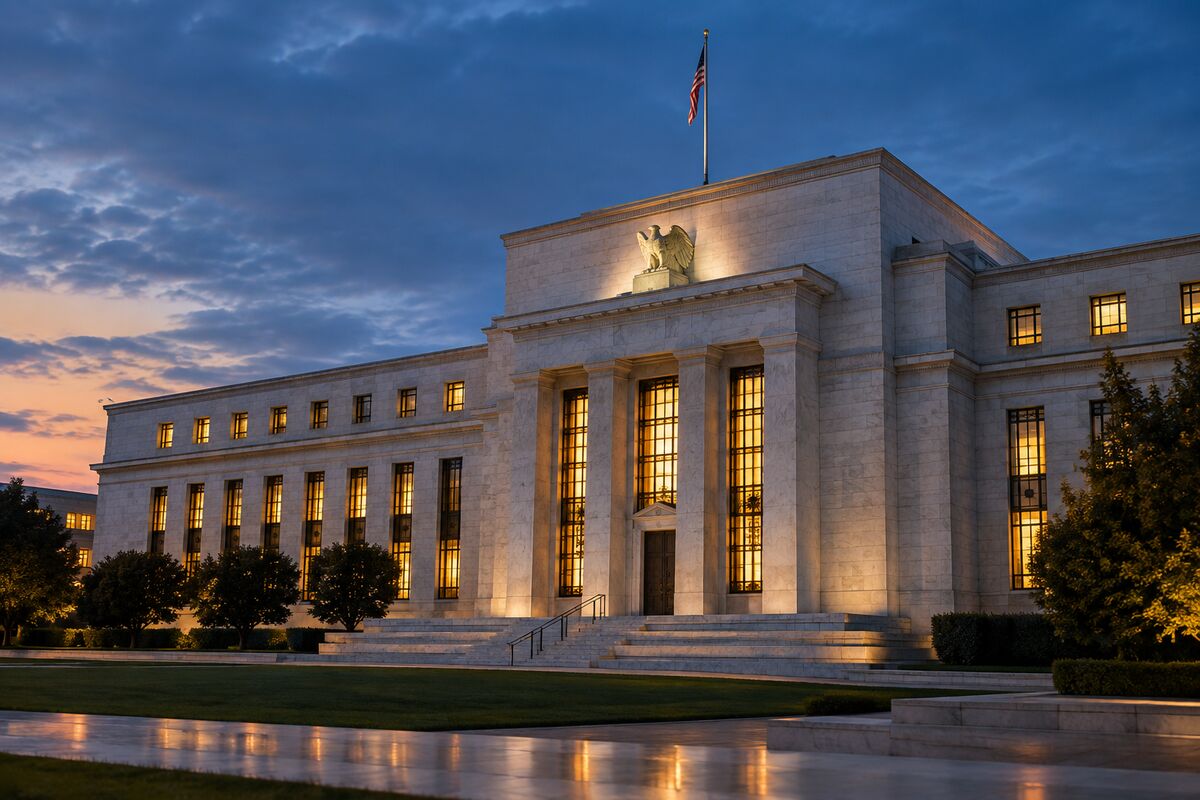
The Federal Reserve is once again putting December on the market’s calendar—not as a quiet holiday pause, but as a potential rate-hike meeting. Governor Christopher Waller’s comments suggest officials are set to raise rates again, a signal that has already sharpened the policy question facing investors: is the next move still a cut, or has inflation kept the central bank’s foot on the brake?
The answer is not settled beyond December. Inflation remains above the Fed’s 2% target, encouraging a more hawkish stance among some officials, while the outlook after the next meeting remains murky. That combination—an increasingly pointed December signal followed by uncertainty—could make the coming policy decision more consequential for US stocks, bonds and mortgage markets than its calendar placement might suggest. Waller’s comments, reported by CNBC, put that tension in plain view.
December becomes the pivot point
The reported signal from Waller is specific: officials appear to be preparing to raise rates again in December. That does not amount to a complete map of monetary policy, however. It identifies a possible next step while leaving the road beyond it largely unmarked.
For markets, that distinction matters. A December hike rather than a cut would represent a change in the near-term policy narrative. Investors have to assess not only the decision itself, but also what it says about the Fed’s tolerance for inflation above target. If officials are willing to tighten policy again, the message may be that price pressures remain important enough to outweigh the case for an immediate easing move.
Yet the murky outlook beyond December complicates any simple interpretation. A hike in December would not automatically establish a continuous path of increases, just as a hawkish tone would not by itself specify the timing or size of future decisions. The Fed’s next move could remain dependent on how inflation evolves and how officials interpret the economy’s response to tighter financial conditions.
Why inflation remains the market’s main character
The 2% inflation target is the central reference point in this debate. Inflation remains above it, and that persistence is pushing some officials toward a more hawkish stance. In practical terms, the target gives policymakers a benchmark against which the urgency of further restraint is judged.
Above-target inflation can make a rate cut harder to justify, particularly when officials are concerned that easing financial conditions could work against their effort to bring price pressures down. A December increase would therefore carry more than a mechanical change in borrowing costs. It could reinforce the idea that the Fed is prioritizing progress toward its inflation target over near-term relief for borrowers and interest-rate-sensitive assets.
That is a reported policy signal, not a forecast of how markets must respond. The market implications are forward-looking. Investors may reprice securities based on their interpretation of the Fed’s reaction function: whether officials see the December decision as a final adjustment, a renewed tightening phase or a step that simply keeps options open.
Equities face a valuation reset
For US equities, a December hike rather than a cut could prompt repricing across the market. Higher interest rates can affect the value investors place on future corporate earnings, especially when valuations depend heavily on profits expected further into the future. As the rate used to discount those earnings rises, valuation multiples may come under pressure.
That pressure would not necessarily fall evenly across the equity market. Interest-rate-sensitive sectors may react more sharply because their valuations and business models are more exposed to financing conditions. Companies that rely on borrowing, or whose expected cash flows sit further out on the horizon, could face a more demanding valuation conversation if investors begin to expect tighter policy for longer.
The important point is not that every share would move in the same direction. A December hike could instead produce a broader sorting process, with investors reassessing which companies can withstand higher financing costs and which depend more heavily on easier monetary conditions. The uncertainty after December may amplify that process because markets would be weighing both the immediate increase and the possibility that the tightening cycle is not yet fully defined.
Bonds may absorb the first shock
Bond markets would also have to digest the difference between a December hike and a cut. A higher policy rate can lift yields on interest-sensitive debt and reduce the appeal of existing bonds carrying lower rates. That creates a potential repricing event as investors adjust the compensation they seek for holding fixed-income securities.
The response across maturities could depend on how investors interpret the Fed’s message. If the hike is viewed as a response to persistent inflation, longer-term bonds may reflect concern that price pressures will remain difficult to contain. If it is viewed as a final move before a period of waiting, the market reaction could be more focused on the uncertainty surrounding future policy.
Either way, the December decision may matter less as an isolated event than as a test of expectations. Bond investors are not simply asking what the Fed does next; they are asking what officials believe must happen after that. With the post-December outlook described as murky, that question may remain a source of volatility in valuations and positioning.
Mortgage markets feel the policy transmission
Mortgage markets offer a more tangible route from central-bank policy to household finances. Higher borrowing costs can make home financing more expensive and may weigh on demand from prospective borrowers. A December hike could therefore reinforce the pressure already associated with elevated rates, particularly for households considering new loans or refinancing decisions.
The effect would not be limited to mortgages. Higher financing costs can also affect housing-related activity and other interest-rate-sensitive areas of the economy. For companies exposed to consumer borrowing, construction or property transactions, the policy signal may become part of the market’s assessment of future demand.
Still, a December increase would not provide a complete forecast for mortgage rates or housing activity. Those markets also reflect broader financial conditions and expectations about the path ahead. The uncertainty after December is therefore crucial: borrowers, lenders and investors may respond not only to the move itself but to whether it suggests that restrictive conditions could persist.
Positioning around an incomplete story
The Fed’s December outlook gives markets a clearer near-term signal but a less certain longer-term narrative. Waller’s comments suggest another hike is on the table, while above-target inflation explains why some officials are leaning hawkish. Beyond that, the policy path remains open.
That ambiguity can influence investor positioning. Market participants may reduce assumptions that a cut is imminent, reassess valuation multiples and pay closer attention to assets most exposed to borrowing costs. But those are implications, not confirmed outcomes. The ultimate repricing will depend on how investors interpret the Fed’s decision and its communication about what follows.
For now, December has become a policy pivot. The Fed’s challenge is to signal determination on inflation without creating unnecessary confusion about the road ahead. The market’s challenge is similar, only faster: distinguish what officials have indicated from what investors are merely anticipating.
Bull/Bear Verdict
Bull Case: A December hike could clarify that officials are responding to inflation above the Fed’s 2% target, potentially giving markets a firmer framework for assessing policy once the decision is made.
Bear Case: A December hike rather than a cut could pressure equity valuation multiples, bond prices and mortgage-sensitive activity, while the murky outlook beyond December may prolong market uncertainty.