
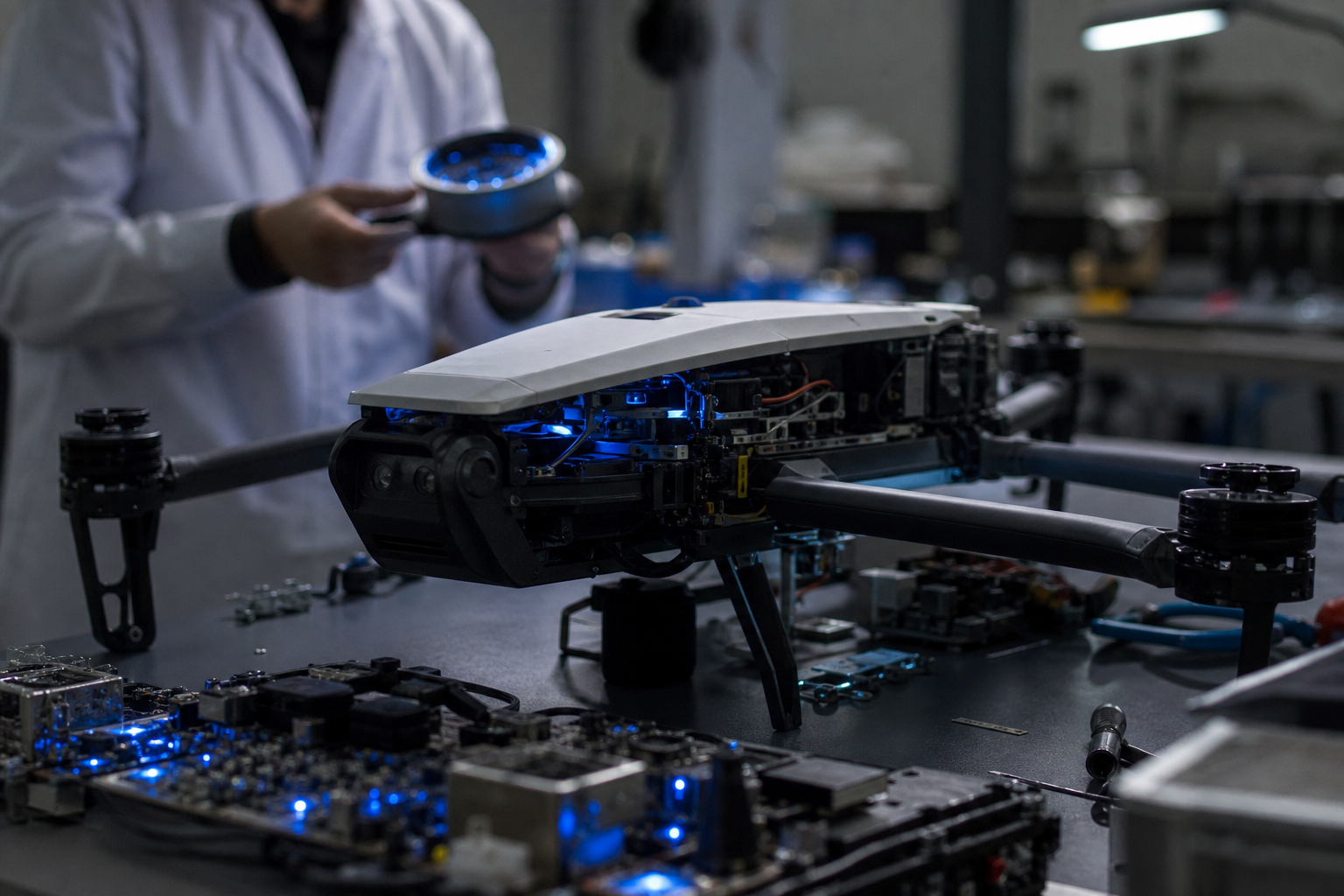
Red Cat's Quaze Acquisition Signals Strategic Pivot Toward Wireless Power in Drone Markets
Red Cat has closed its acquisition of Quaze Technologies, marking a significant consolidation in the drone technology sector. The deal represents a calculated move to integrate wireless power capabilities into Red Cat's existing platform—a capability that could reshape operational parameters for commercial and industrial drone deployments.
The Strategic Logic Behind the Deal
Wireless power transmission has long represented a frontier in drone technology. Traditional battery-dependent systems impose hard constraints: flight time limitations, payload trade-offs, and operational radius restrictions. By acquiring Quaze Technologies, Red Cat gains access to proprietary wireless power solutions that could address these structural limitations.
The acquisition reflects a broader trend in the drone industry toward extended-duration missions. Companies operating inspection, surveillance, or delivery platforms face mounting pressure to reduce downtime and expand operational windows. Wireless power—the ability to charge or power drones mid-flight or during stationary operations—could materially extend mission viability without requiring larger battery packs or more frequent vehicle rotations.
Implications for Drone Operations Across Environments
The integration of wireless power capabilities carries distinct operational advantages across multiple deployment scenarios:
- Extended Flight Duration: Wireless charging stations could enable continuous or near-continuous operations in fixed-area surveillance, industrial inspection, or perimeter monitoring applications—environments where drones currently face 20–30 minute flight windows per battery cycle.
- Reduced Logistics Overhead: Operations requiring multiple drone rotations due to battery constraints could consolidate to fewer vehicles with wireless charging infrastructure, lowering capital expenditure and maintenance complexity.
- Environmental Resilience: Harsh or remote operating environments—offshore platforms, industrial facilities, critical infrastructure sites—benefit from infrastructure-independent power delivery, reducing reliance on battery swaps in challenging conditions.
- Payload Optimization: By decoupling power delivery from onboard batteries, operators may reallocate weight budgets toward sensors, processing units, or specialized equipment.
Competitive Positioning in the Drone Market
The drone technology sector remains highly fragmented, with players competing across hardware platforms, software ecosystems, and specialized use-case solutions. Red Cat's acquisition of Quaze Technologies positions the company to differentiate on a capability—wireless power—that remains nascent in commercial deployments.
This move may signal Red Cat's intent to compete not just on drone hardware, but on comprehensive operational ecosystems. Companies offering integrated platforms (hardware + power infrastructure + software) may command premium positioning versus point-solution competitors. The acquisition suggests Red Cat is building toward that integrated model.
Future Outlook and Market Considerations
The integration of wireless power into Red Cat's platform faces several near-term execution variables. Infrastructure deployment costs, standardization challenges, and regulatory approval timelines for wireless power systems remain uncertain. Wireless power transmission operates in regulated spectrum bands, and deployment may require coordination with telecommunications and aviation authorities.
However, if Red Cat successfully integrates Quaze's technology and demonstrates operational viability across commercial use cases, the company could capture early-mover advantage in a market segment currently underserved. Industries with high-value, duration-constrained operations—power line inspection, precision agriculture, infrastructure monitoring—represent addressable markets where wireless power capabilities could command pricing premiums.
The acquisition also signals Red Cat's capital allocation strategy: organic R&D investment in wireless power may have faced longer timelines or higher risk than acquisition. By bringing Quaze in-house, Red Cat accelerates capability deployment and consolidates intellectual property.
What Investors Should Monitor
Key metrics to track post-acquisition include:
- Integration timeline and technology roadmap announcements
- Customer pilot programs or deployment announcements using wireless power-enabled platforms
- Regulatory filings or spectrum licensing activities related to wireless power infrastructure
- Competitive responses from other drone platform providers
Red Cat's Quaze acquisition represents a meaningful bet on wireless power as a differentiating technology in commercial drone operations. Success hinges on execution—specifically, the ability to deploy integrated solutions that deliver measurable operational improvements for target customers. The market for extended-duration drone capabilities remains substantial, but competitive intensity may increase as other players recognize the strategic value of wireless power integration.
Bull/Bear Verdict
Bull Case: Red Cat's acquisition of wireless power technology may enable extended-duration drone operations that address a genuine market constraint. Early integration success could position the company as a differentiated platform provider in high-value inspection and monitoring applications, potentially supporting premium pricing and expanded customer adoption across industrial verticals.
Bear Case: Wireless power integration faces significant technical and regulatory hurdles—infrastructure deployment costs, spectrum licensing complexity, and standardization challenges could delay commercialization. Execution risk on integration remains elevated, and competitive responses from larger drone platforms could compress any first-mover advantage before Red Cat achieves meaningful revenue scale from wireless power capabilities.