
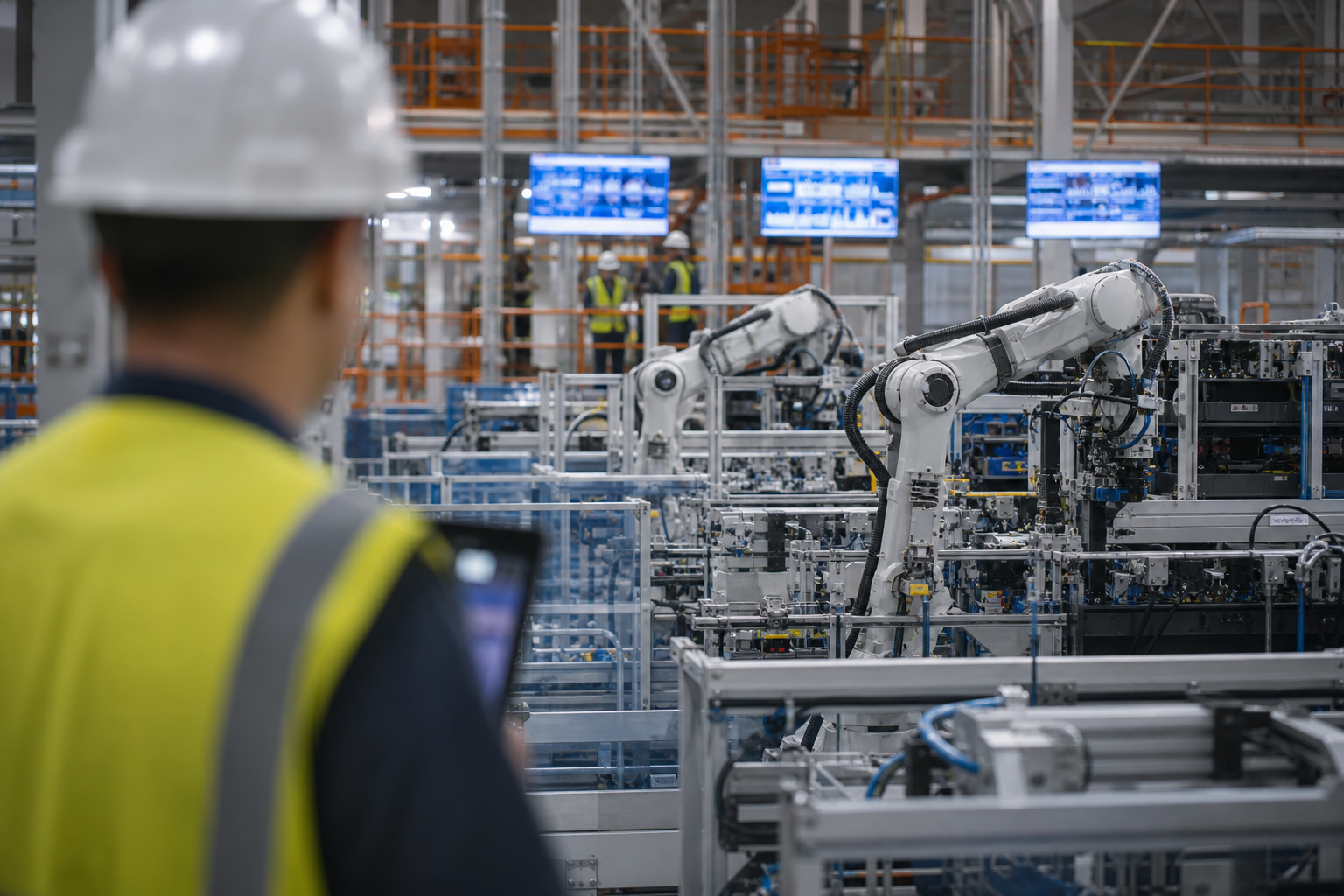
In the ever-evolving landscape of technology, Honeywell's CEO Vimal Kapur has outlined a transformative vision centered around artificial intelligence (AI) and its role in automation. As companies across the globe grapple with the persistent challenge of labor shortages, Honeywell positions itself as a frontrunner in integrating AI to enhance operational efficiency.
Kapur emphasizes that AI is not merely an enhancement but a fundamental shift that could redefine automation across various sectors. The technology promises to convert operational data into actionable insights, a necessity that could address the skills gap many industries are currently facing. This perspective raises pertinent questions about how Honeywell's strategic focus on AI might reshape the industrial landscape.
The Promise of AI in Automation
AI technology has reached a critical juncture where its potential applications are becoming increasingly clear. Industries that rely heavily on automation, such as manufacturing and logistics, could see significant benefits. By leveraging AI, companies can enhance their decision-making processes and streamline operations, potentially leading to higher productivity.
However, investors should note that the implementation of AI is not without its challenges. The transition to AI-driven systems requires substantial investment and may encounter resistance from employees concerned about job displacement. Moreover, the effectiveness of AI in truly mitigating labor shortages remains to be fully tested in real-world environments.
Addressing Labor Shortages
The labor shortages currently affecting various sectors have been exacerbated by the pandemic, leading to a reevaluation of workforce strategies. Honeywell's approach aims to alleviate these shortages by deploying AI to automate repetitive tasks, freeing up human workers for more complex roles. This shift could help businesses not only fill gaps in their workforce but also enhance overall efficiency.
On the other hand, while automation may seem like a straightforward solution, it could also lead to unintended consequences. Companies may find themselves in a cycle of dependency on technology, which could become problematic if these systems face outages or failures. Additionally, the long-term implications for the workforce must be considered; as jobs evolve, there is a pressing need for reskilling and upskilling initiatives to prepare current employees for the future.
Honeywell's Strategy and Market Positioning
Honeywell's strategic focus on AI positions it well within the industrial sector, where competition is increasingly fierce. By emphasizing the integration of AI into its automation solutions, the company may not only improve its market share but also establish itself as a leader in industrial AI automation. This could attract investors looking for companies at the forefront of technological innovation.
Nevertheless, potential investors should be cautious. While Honeywell's vision is certainly ambitious, the broader market environment poses risks. Regulatory changes, competition from other tech firms, and the pace of technological adoption could significantly impact the company's performance. Furthermore, if AI does not deliver the promised results, the backlash could be substantial.
The Bottom Line
As we look to the future, Honeywell's commitment to AI in addressing labor shortages and improving automation efficiency presents both opportunities and risks. The company's strategy indicates a profound shift in how industries operate, but it remains to be seen whether these innovations will yield the desired outcomes.
Investors should weigh the potential benefits against the inherent risks associated with such a significant pivot in technology. As Honeywell pursues this path, the industrial sector—and indeed the broader market—will be watching closely to see if AI can indeed fulfill its promise.
For further details on Honeywell's vision and strategies, you can read more in the full article on CNBC.