
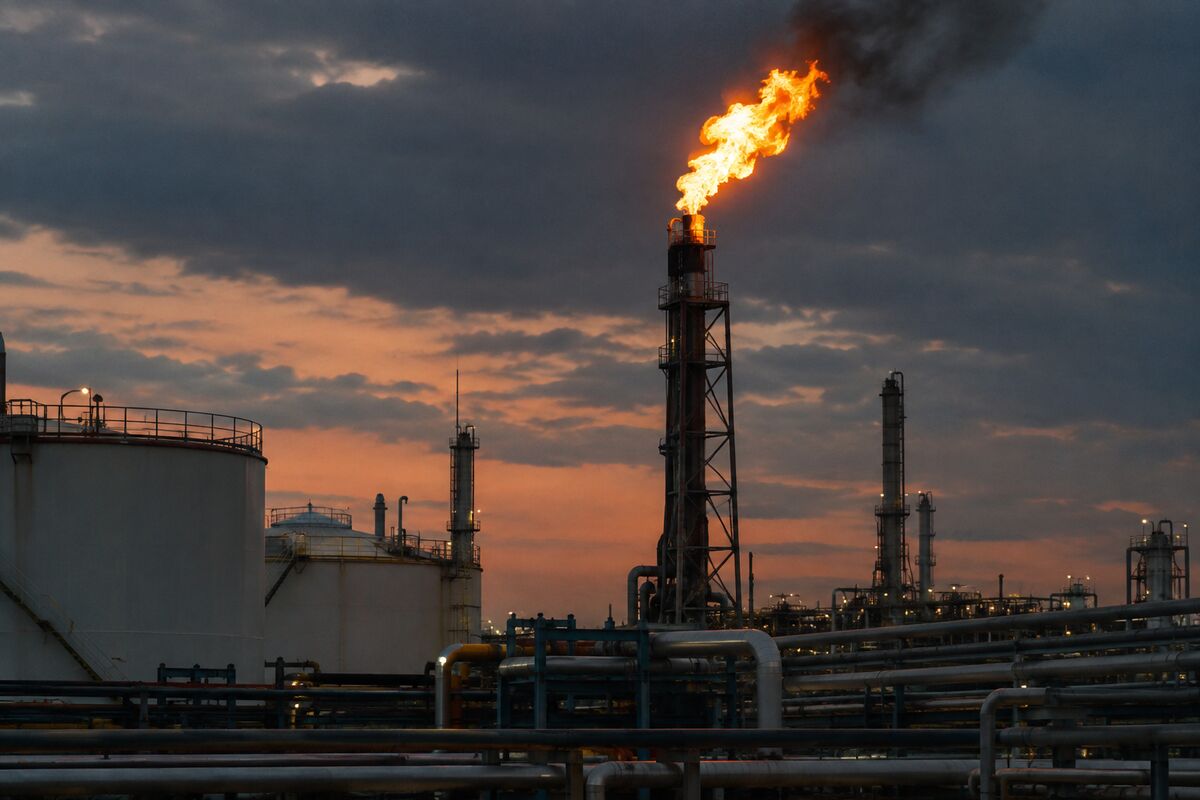
Wall Street does not need a formal military escalation to turn defensive; it only needs uncertainty in the oil market. US equities declined as crude prices surged after reports that President Donald Trump rejected an Iran peace proposal, forcing traders to reassess the risks facing the broader market.
The immediate issue is not merely diplomacy. It is the possibility that a renewed geopolitical risk premium in crude could become a wider drag on sentiment across the S&P 500, Dow Jones and Nasdaq as the new trading week begins.
Oil moved sharply higher after reports that Iran’s foreign minister’s stay in New York was not extended. Mediators were also unable to relay a constructive response from the US. That combination weakened expectations for an immediate diplomatic breakthrough and gave energy markets a reason to price in greater uncertainty.
For equities, the message is blunt: higher crude prices can change the market conversation quickly. Traders must now weigh the potential economic impact of more expensive energy against the possibility that the diplomatic channel remains open. The result is a less forgiving backdrop for risk assets, even before any additional developments emerge.
Diplomacy Remains the Market’s Main Variable
The situation is not closed. The US and Iran are expected to hold separate talks, with mediators indicating that discussions could take place Monday or Tuesday. That timing matters because markets will be looking for evidence that communication remains viable after the reported rejection of the peace proposal.
Those expected discussions may help determine whether the current oil move reflects a temporary repricing or a more persistent geopolitical premium. If the talks produce a constructive signal, some of the pressure on crude and broader risk sentiment could ease. If they fail to deliver one, traders may continue to demand compensation for the uncertainty surrounding supply and regional tensions.
The report on the Iranian foreign minister’s stay in New York provides the immediate diplomatic backdrop for the oil move. It also explains why the market reaction has extended beyond foreign policy headlines: crude is now carrying a clearer geopolitical signal.
What It Means for the Major US Indexes
The S&P 500 is exposed to the broadest interpretation of this shift. A higher oil price and weaker risk appetite could weigh on market sentiment across sectors, particularly if investors begin to view the geopolitical premium as more durable rather than temporary.
The Dow Jones may face the same macro pressure through the market’s reaction to energy costs and economic uncertainty. The index’s direction could remain sensitive to whether the coming talks reduce tension or reinforce the perception that negotiations are stalled.
The Nasdaq is also vulnerable to the change in market tone. A sharper focus on crude, diplomacy and defensive positioning may reduce the appetite for riskier areas of the equity market. That does not establish a guaranteed path for the index, but it does indicate why technology-heavy equities may struggle to ignore a broad deterioration in sentiment.
The Bottom Line for Traders
This is a headline-driven market, but the headline has a measurable transmission mechanism: diplomatic uncertainty raises the geopolitical risk premium in crude, and higher oil is pressuring Wall Street’s broader risk appetite. The next test comes with the expected separate US-Iran talks on Monday or Tuesday.
Until those discussions clarify the diplomatic outlook, volatility may remain elevated and index direction may be dictated more by developments in oil and Iran than by ordinary corporate news. The market is not demanding certainty; it is demanding evidence that the situation is not worsening.
Bull/Bear Verdict
Bull Case: If the expected separate US-Iran talks on Monday or Tuesday produce a constructive signal, the geopolitical risk premium in crude could ease, potentially improving sentiment toward the S&P 500, Dow Jones and Nasdaq.
Bear Case: If diplomacy remains stalled after the reported rejection of the peace proposal and the failed effort to communicate a constructive US response, sharply higher oil could continue pressuring Wall Street risk sentiment and index direction.