
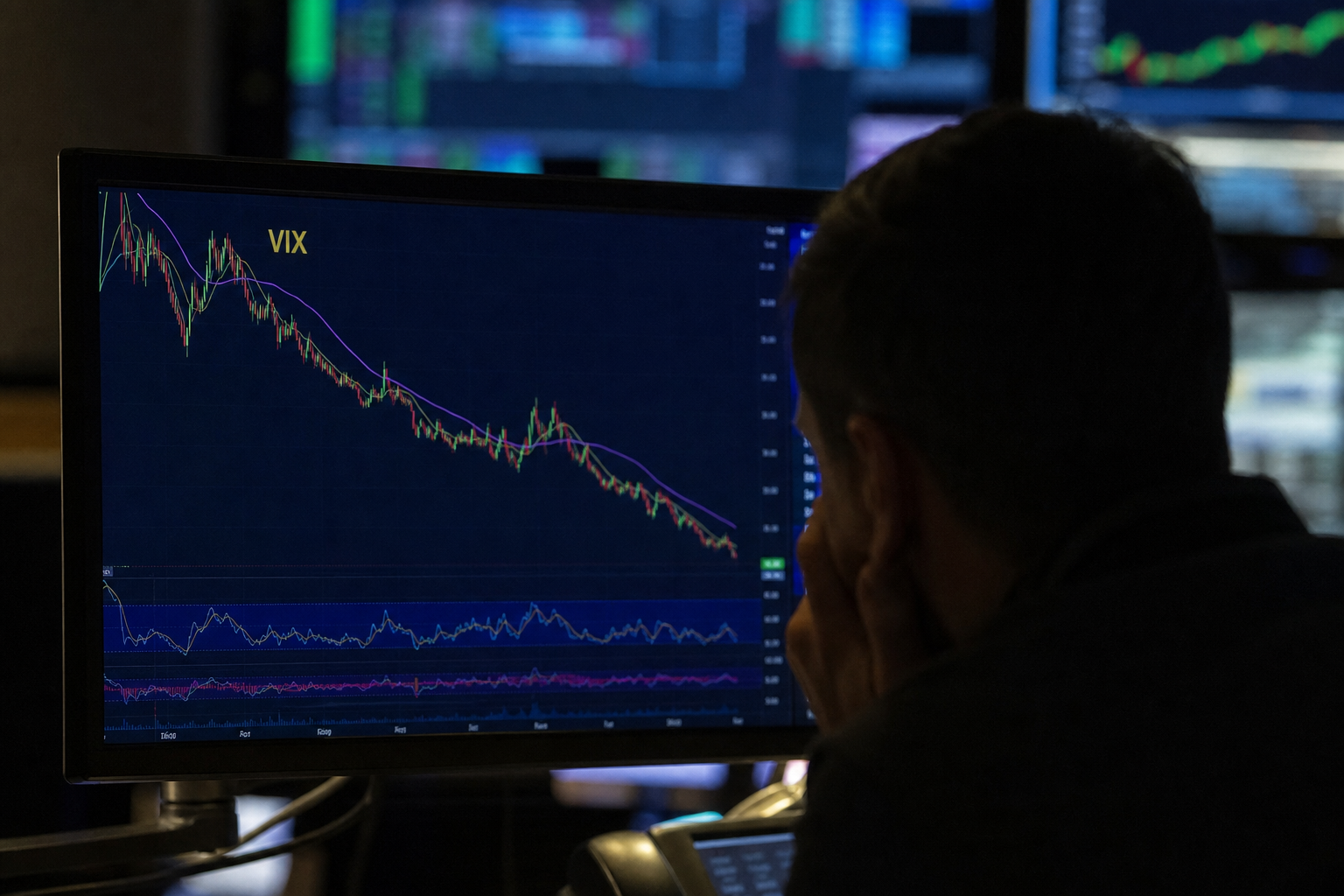
The Volatility Index, or VIX, has reached a year-to-date low of 14.1, a striking indicator of reduced market fear. This development comes at a pivotal moment as traders recalibrate their strategies in light of evolving leadership at the Federal Reserve. As our markets react to this newfound confidence, the implications for trading could be profound.
The drop in the VIX is not merely a number; it reflects a broader sentiment shift among traders. Increased confidence in Federal Reserve Chair Kevin Warsh’s leadership style is playing a crucial role in this dynamic. His commitment to tackling inflation and maintaining the 2% target has instilled a sense of stability among market participants. Yet, the question lingers: what does this mean for the trading landscape?
VIX and Market Sentiment
The VIX, often dubbed the "fear index," serves as a barometer for market volatility and trader sentiment. A reading of 14.1 suggests that traders are feeling less anxious about market fluctuations. Historically, such lows can indicate complacency in the markets, which could lead to unforeseen turbulence if traders are caught off guard by sudden shifts.
Warsh’s Fed Leadership
Warsh's recent comments underline the Fed's commitment to its inflation target. He explicitly stated that inflation is not slowing and that the Fed will remain vigilant in its monetary policies. This commitment to a September rate hike introduces an interesting dichotomy in the current market environment. While the low VIX indicates reduced fear, the potential for increased interest rates could stir volatility, particularly for options traders who thrive on price movements.
What Lies Ahead for Traders?
As the VIX dips, traders might be tempted to adopt more aggressive positions, but this could be a double-edged sword. With the possibility of a September rate hike looming, markets could see increased volatility that undermines the current sense of calm. For options traders, the implications could be significant, as they may need to navigate a landscape where volatility could spike unexpectedly.
In summary, while the current environment appears favorable with a low VIX, the potential for a rate hike adds an element of uncertainty. Traders must weigh the reduced fear against the impending economic decisions that could reshape the market landscape.
For further insight into the implications of the VIX's year-low and Warsh's approach, you can explore the full articles on CNBC and Bloomberg.