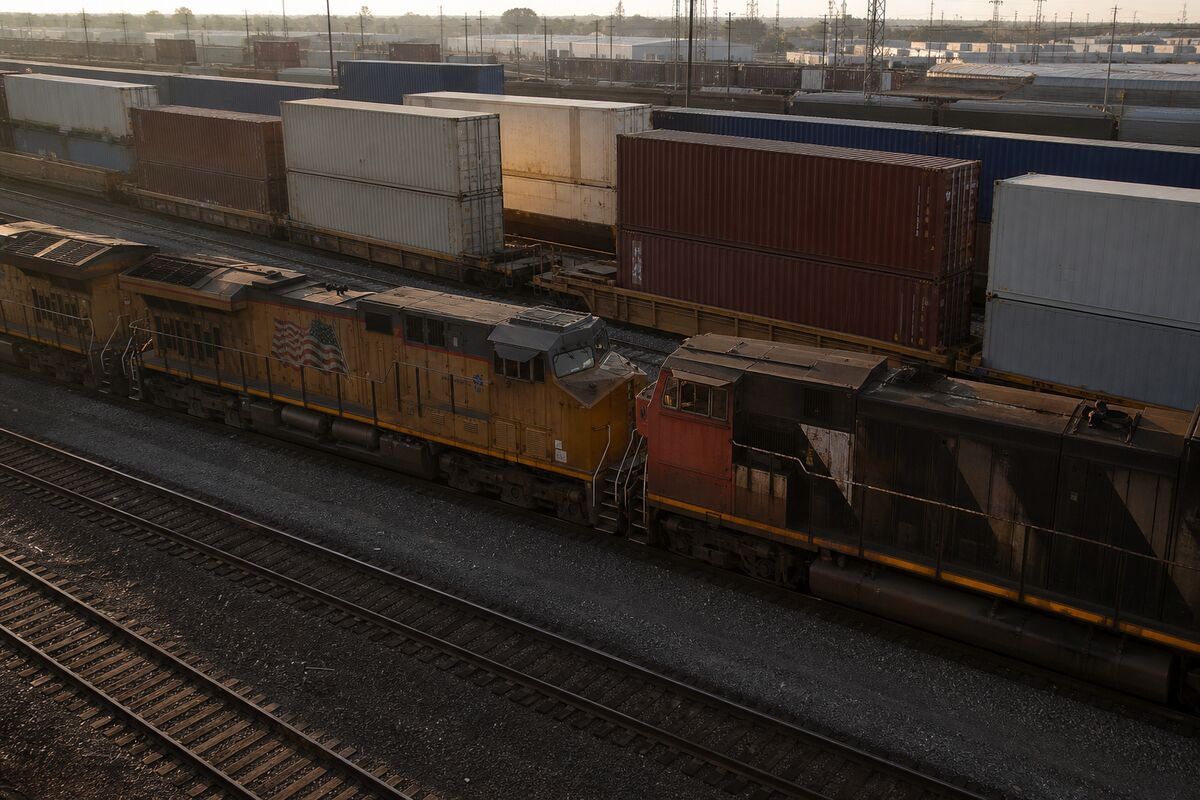
Merger arbitrage is a market built on the gap between what is promised and what is ultimately delivered. That gap is now widening around the proposed Norfolk Southern–Union Pacific transaction, after a report on remarks made by Union Pacific CEO.
The signal matters because the rail mega-merger is being judged not only as an industrial combination, but also as a trade whose payoff depends on deal completion. For arbitrage traders, a widening spread is the market’s blunt way of saying that uncertainty has increased—even when the precise source of that uncertainty remains open to interpretation.
The development was flagged in a report on the Norfolk Southern–Union Pacific deal spread and comments attributed to Union Pacific CEO. Union Pacific trades under the ticker $UNP, making the company a central reference point for traders tracking the transaction.
Why the spread matters
In a merger-arbitrage setup, the spread represents the market’s assessment of the difference between the current trading terms and the value expected if a transaction closes. When that spread widens, it may indicate that traders are assigning greater uncertainty to completion, timing or the terms of the deal.
That does not establish that the merger is failing. It does, however, suggest that the market is demanding a larger cushion before treating the transaction’s outcome as dependable. Reported remarks from a chief executive can attract particular attention because they may shape perceptions of management’s commitment, strategic priorities or the path ahead. Without more detail about the remarks, the disciplined conclusion is limited: they have become relevant to how traders are pricing deal risk.
A sharper test for merger arbitrage
Merger-arbitrage traders watch transactions like this closely because large deals can carry several layers of uncertainty. The proposed combination brings together two major US rail companies, placing the transaction squarely in the realm of large industrial and transportation mergers. Those deals tend to draw scrutiny from investors assessing strategic logic, regulatory considerations and the practical challenge of completing a complex combination.
The widening spread therefore serves as a sentiment indicator. It shows that the market’s view of the transaction has become less comfortable following the report on the $UNP CEO’s remarks. For traders, the question is not simply whether the merger makes strategic sense. It is whether the market’s current compensation for completion risk is sufficient given the uncertainty now reflected in the spread.
The market’s message
There is a contrarian lesson here. A wider spread can create the appearance of greater opportunity, but it also reflects a market that sees more risk in the path to closing. Treating the spread as a bargain without understanding why it widened would miss the central point of merger arbitrage: the return profile is tied to an event, and events can change the market’s probability assessment quickly.
For now, the reported CEO remarks have put completion risk back in focus. The widening spread indicates that traders are reassessing the pending rail mega-merger rather than accepting its outcome as settled. That is a meaningful shift in tone for a transaction with implications for sentiment toward major US industrial and transportation combinations.
Bull/Bear Verdict
Bull Case: The widening spread may create a more attractive merger-arbitrage setup if the reported remarks do not translate into a substantive obstacle and confidence in completion improves.
Bear Case: The widening spread after the report on the $UNP CEO’s remarks suggests that traders see greater deal-completion uncertainty, leaving the proposed rail merger exposed to further risk repricing.