
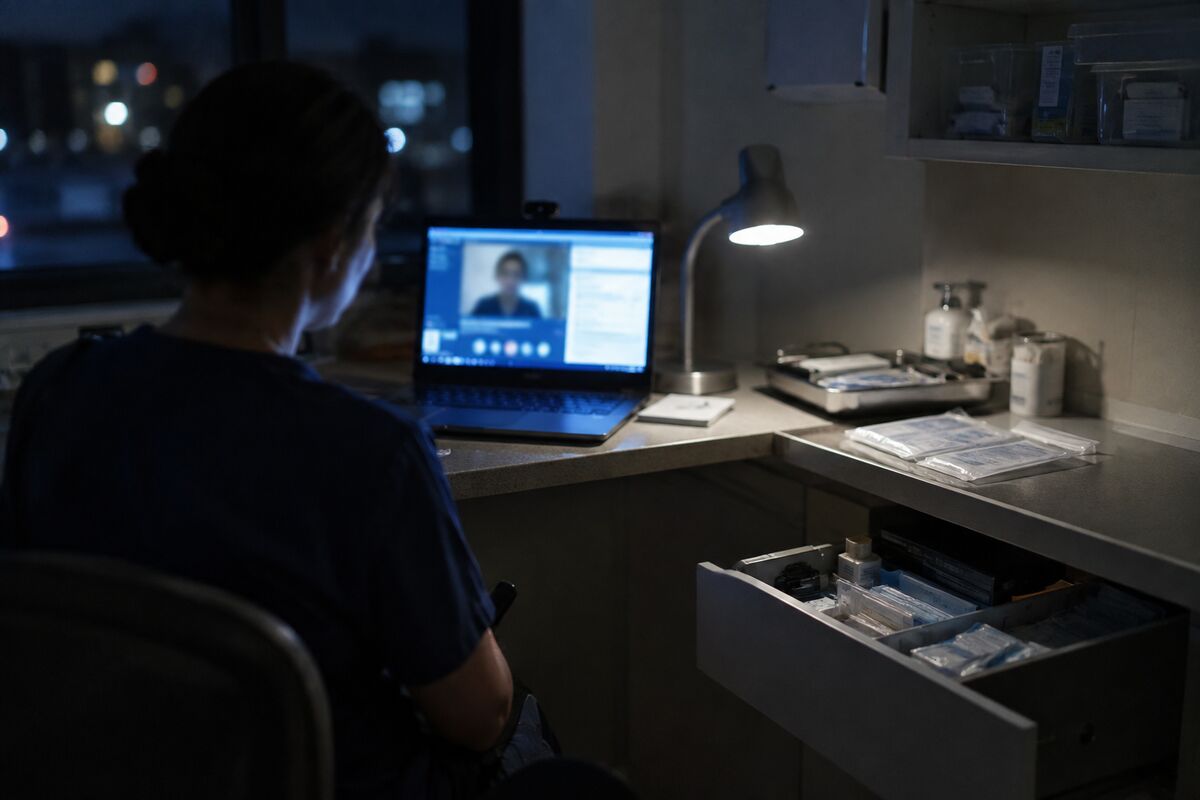
Grindr is asking investors to look beyond the familiar social-networking playbook. The company has announced an agreement to acquire PurposeMed for $250 million, a move that would put healthcare and telehealth at the center of its next growth narrative.
The deal is more than a new line on Grindr’s corporate map. It is a bet that a consumer-technology company can extend its relationship with users into digital health—while persuading investors that the expansion adds strategic depth rather than operational distraction.
As Seeking Alpha reported, Grindr announced the agreement to buy PurposeMed for $250 million. That purchase price is the central disclosed measure of the transaction, and it gives investors a clear starting point for judging the ambition of the diversification push.
From social network to broader platform
Grindr’s proposed acquisition would expand the company beyond social networking and into healthcare and telehealth. That shift could reshape how the market views Grindr: not simply as a focused consumer internet business, but as a company seeking a broader role in the digital lives of its users.
The strategic logic is straightforward in outline. Consumer technology can create regular engagement and a large addressable audience, while digital health can add a service-oriented dimension to that relationship. The combination may allow Grindr to explore a more diversified business model, with healthcare positioned as an extension of its existing connection to a specific community.
That is the attractive version of the story. In it, Grindr supplies consumer reach and brand familiarity, while PurposeMed brings the healthcare and telehealth platform that enables the expansion. The acquisition could give Grindr a way to make its growth narrative more expansive, potentially changing the questions investors ask about the company’s long-term opportunity.
The harder part begins after the announcement
Strategic logic, however, is not the same as execution. Combining a social-networking business with a digital-health platform introduces a complicated set of integration questions. The two businesses may operate with different priorities, workflows and measures of success. Translating a consumer relationship into healthcare engagement could require careful execution rather than a simple transfer of users from one service to another.
There is also a valuation question embedded in the $250 million price tag. Without additional transaction terms or financial forecasts provided in the assignment, investors have limited disclosed information with which to assess whether the purchase price appropriately reflects the opportunity and the risks. The number is substantial enough to make the deal strategically meaningful, but the announcement alone does not establish how quickly the combined business could deliver results.
Integration risk may be especially important because healthcare carries a different operating context from social networking. A digital-health platform may demand a distinct approach to trust, service delivery and business management. Grindr’s challenge will be to pursue the convergence without blurring the identity or effectiveness of either side of the company.
A new narrative, with a demanding test
For investors, the PurposeMed agreement creates a choice of interpretation. Bulls may see a consumer-technology company using its existing position to enter a related and potentially broader market. Skeptics may see a business stepping outside its established lane before the benefits of the combination are demonstrated.
The $250 million acquisition therefore matters not only because of what Grindr is buying, but because of what it says about management’s ambitions. The company is signaling that its future may include healthcare and telehealth alongside social networking. Whether that signal becomes a credible growth story will depend on integration, execution and the value ultimately created by the diversification.
Bull/Bear Verdict
Bull Case: The $250 million PurposeMed acquisition could broaden Grindr’s growth narrative by combining its consumer-technology position with healthcare and telehealth capabilities.
Bear Case: The same $250 million commitment could expose Grindr to integration, execution and valuation risks if the social-networking and digital-health businesses prove difficult to combine.