
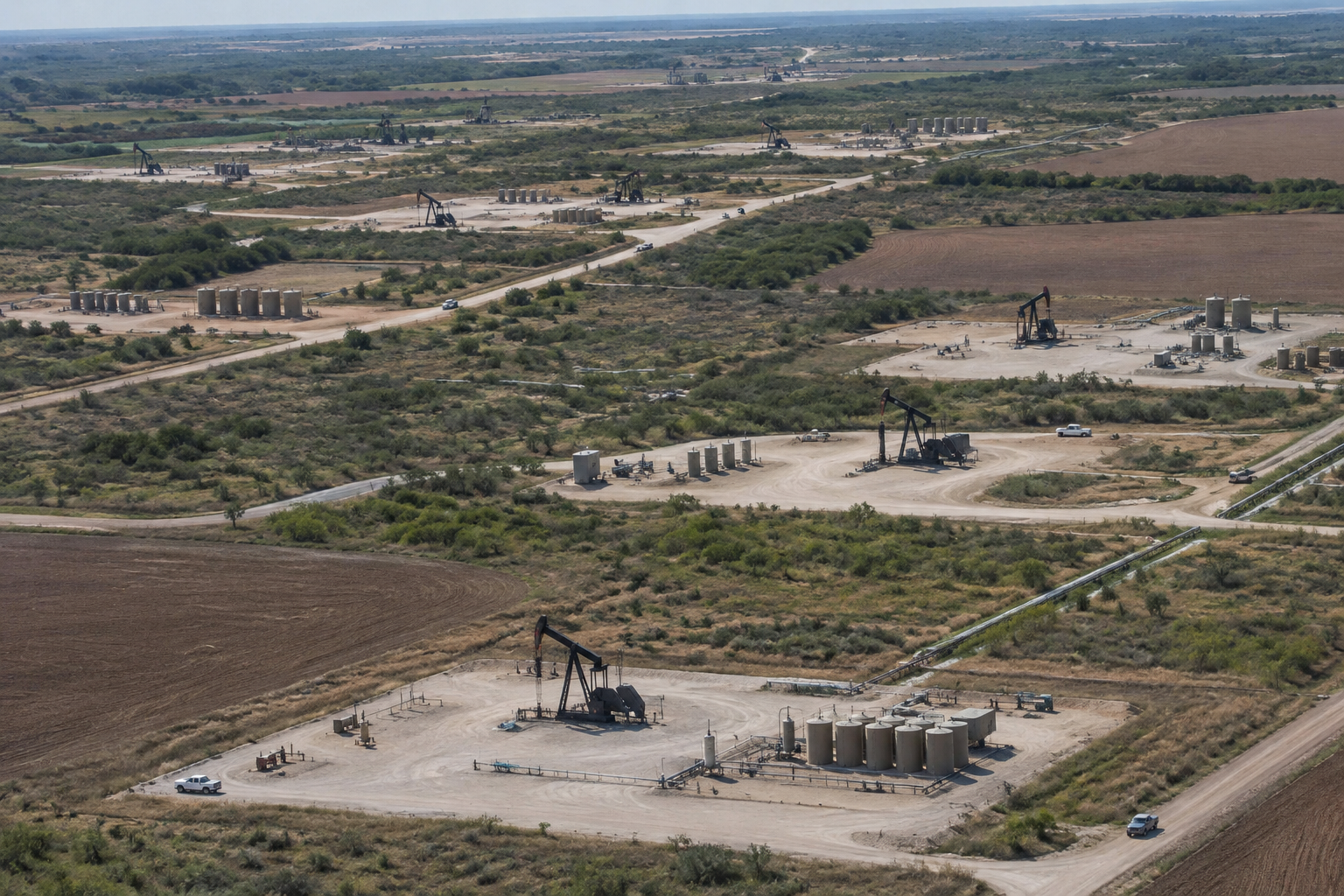
Crescent Energy’s planned $3.85 billion acquisition of Devon Energy’s Eagle Ford assets is large enough to alter the competitive map of a major US oil basin. The headline figure matters, but the more consequential question for the market is how Crescent funds the transaction and how much balance-sheet pressure accompanies the added scale.
That financing debate arrives alongside a sharp move in the underlying commodity: WTI crude rose 4.1% to $92.60. Higher oil prices may improve the near-term economics of acquired production, but they also raise the valuation bar for a deal whose purchase price is estimated at approximately $3.85 billion.
Crescent Energy Company, listed on the NYSE under $CRGY, has entered a definitive agreement to acquire the Eagle Ford assets from Devon. The transaction therefore combines an identifiable basin expansion with a market environment that is more supportive for oil-focused assets than a lower-price setting would be.
The company described the deal as a way to solidify its position in the Eagle Ford. That framing points to a potential scale advantage: adding Devon’s assets could make Crescent a more significant operator in the basin, with a larger operational footprint and a greater concentration of its business in one established US producing region.
Scale is the strategic variable
In basin consolidation, size can matter because a larger position may improve operating coordination and increase the strategic importance of the buyer to suppliers, service providers and potential counterparties. Those are analytical possibilities rather than guaranteed outcomes, and the assignment does not provide production volumes, reserve estimates or cost data for the assets.
That missing operating detail is important. Without disclosed figures for acquired output or cash generation, the $3.85 billion price cannot be evaluated through production multiples, reserves multiples or cash-flow yields from the available information. The cleanest confirmed measure is the transaction value itself—and whether the financing structure preserves flexibility after closing.
Financing could determine the market’s verdict
The central investor-focused issue is Crescent’s funding mix. The available transaction information does not specify the split among cash, new debt, equity or other financing. That makes the eventual capital structure a key disclosure to monitor. A debt-heavy approach could increase interest obligations and leverage, while an equity component could limit incremental borrowing but introduce dilution considerations. Those effects cannot be quantified until Crescent provides the relevant terms.
- Debt impact: Market participants may focus on how much incremental borrowing is required and how the transaction changes Crescent’s leverage.
- Funding mix: The balance between debt, cash and equity could shape both financial flexibility and shareholder dilution.
- Asset economics: Production, reserves, operating costs and expected cash generation would help establish whether the $3.85 billion price is supported by the acquired assets.
- Execution: The definitive agreement is a stated transaction milestone, but the available information does not provide closing conditions or a completion date.
WTI at $92.60 raises the stakes
WTI’s reported 4.1% rise to $92.60 changes the backdrop for the deal. If stronger crude prices persist, revenue and cash-flow potential from oil assets may be higher than under a weaker-price scenario. That could support the acquisition’s economics and make debt service more manageable than it otherwise would be.
But commodity strength cuts both ways. A higher oil price can also support elevated asset valuations, meaning Crescent may be paying for assets in a stronger pricing environment. If crude prices retreat, the cash-flow assumptions underpinning the purchase could become less favorable. The transaction’s sensitivity to WTI is therefore likely to be a major part of the market’s analysis.
A signal for US energy consolidation
The agreement also reinforces the continuing strategic importance of consolidation among US-listed energy companies. Crescent is buying from Devon rather than building the same position organically, demonstrating how basin scale can be pursued through portfolio transactions. Broader sentiment toward US energy equities may respond positively if investors interpret the deal as disciplined expansion; sentiment could weaken if financing terms imply excessive balance-sheet strain.
For the full transaction context, Crescent’s announcement is available through Business Wire. The next data points—funding details, leverage implications and asset-level operating metrics—will determine whether the $3.85 billion price looks strategically efficient or financially demanding.
Bull/Bear Verdict
Bull Case: The $3.85 billion Eagle Ford acquisition could strengthen $CRGY’s basin scale, while WTI at $92.60 after a reported 4.1% rise may support the acquired assets’ economics.
Bear Case: The deal could pressure $CRGY if its financing requires substantial new debt or equity, and weaker crude prices would challenge economics built around WTI at $92.60.