
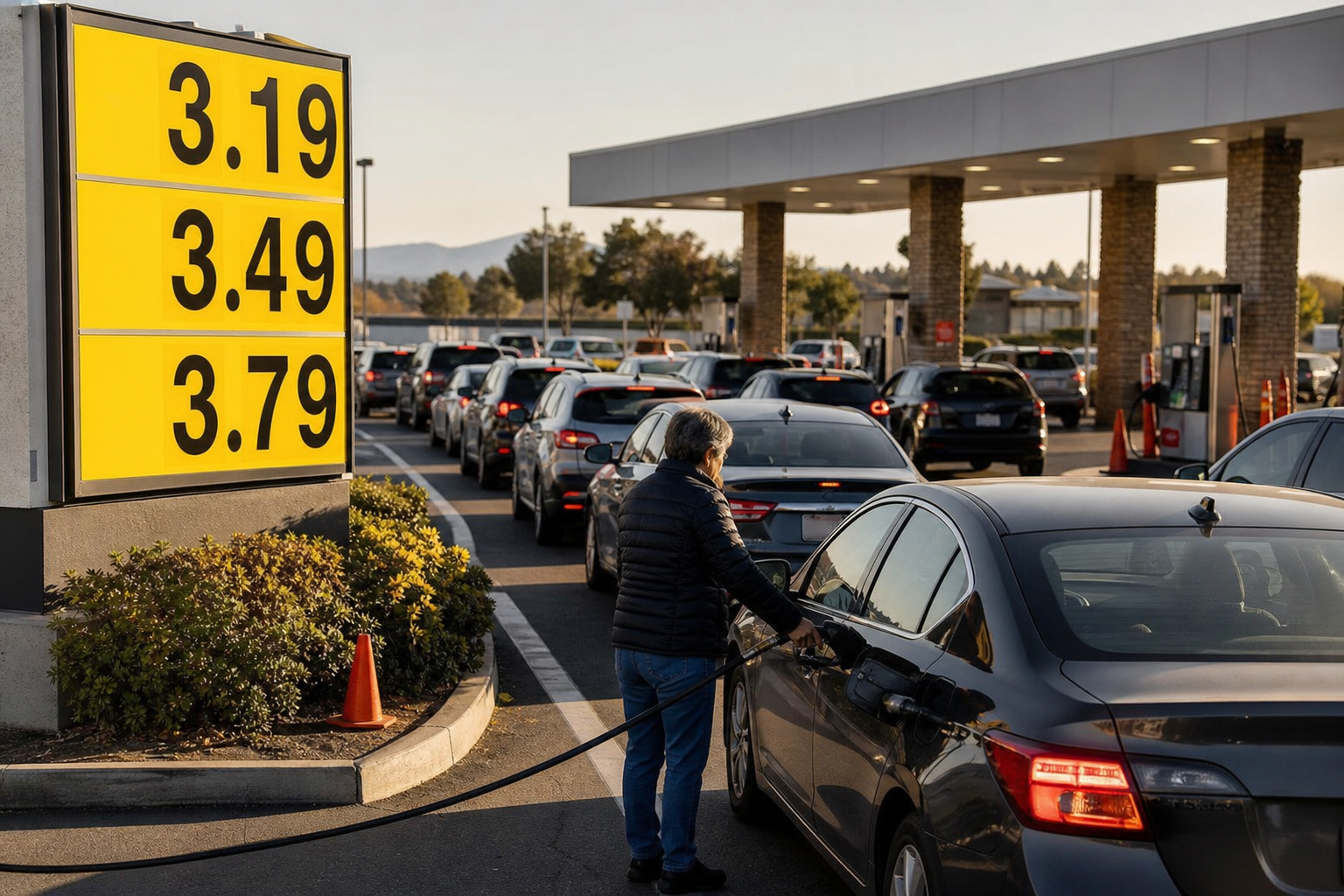
As gas prices climb higher, consumers are increasingly seeking refuge at the pump, and Costco ($COST) is cashing in on this trend like a seasoned sailor navigating stormy seas. With record demand for its gas stations, the retail giant is not just selling fuel; it’s fueling a membership model that enhances loyalty while positioning itself as a formidable competitor against retail titans like Walmart and Target.
The current landscape of soaring gas prices has transformed Costco’s gas stations into a beacon of savings for budget-conscious consumers. As families scramble to keep their fuel expenses manageable, Costco’s strategy of maintaining lower prices at its gas pumps is not merely a stroke of luck; it’s a well-crafted competitive strategy that reinforces the value of membership. This approach has proven to be a lifeline for many Americans, transforming what could be a burdensome expense into a more manageable one.
Record Demand and Strategic Pricing
With rising gas prices serving as a backdrop, Costco is witnessing an unprecedented surge in demand for its fuel stations. The chain’s ability to offer lower prices than many competitors is drawing in drivers like moths to a flame. According to a recent report, Costco’s gas stations are seeing record numbers of visitors, a testament to the effectiveness of its pricing model in the current economic climate.
Costco’s strategy revolves around a pricing model that often undercuts its competitors. By leveraging its purchasing power and operational efficiencies, the company is able to keep prices lower than those found at traditional gas stations. This not only attracts more customers but also enhances the overall value of a Costco membership. For members, every trip to the pump represents not just a necessary stop but an opportunity to save—a powerful incentive in today’s high-price environment.
Impact on Stock and Competitive Positioning
The implications of this strategy extend beyond the gas station forecourt and into the realm of investor sentiment. As demand for fuel surges, so too does the potential for favorable stock performance. The increased traffic to Costco’s gas stations could translate into heightened sales across its retail offerings, leading to an uptick in overall revenue. This symbiotic relationship underscores the importance of Costco’s gas stations as a driver of broader business success.
In the battle for retail supremacy, Costco’s approach sets it apart from rivals like Walmart and Target. While these competitors also seek to capture consumer attention, Costco’s unique value proposition—in this case, lower gas prices—could provide a significant edge. As consumers increasingly prioritize savings, Costco’s gas stations could serve as a catalyst for attracting new members and retaining existing ones, ultimately bolstering its competitive positioning.
Conclusion
In the face of rising gas prices, Costco's strategic maneuvering in the fuel market is a savvy move that not only meets consumer demand but also enhances the overall membership experience. As the retail landscape evolves, Costco’s ability to adapt and innovate will likely play a crucial role in its continued success. For investors, this dynamic could suggest a promising outlook for $COST as it navigates the currents of today’s challenging market.
For more insights into Costco’s pricing strategy, check out the full article on CNBC here.