
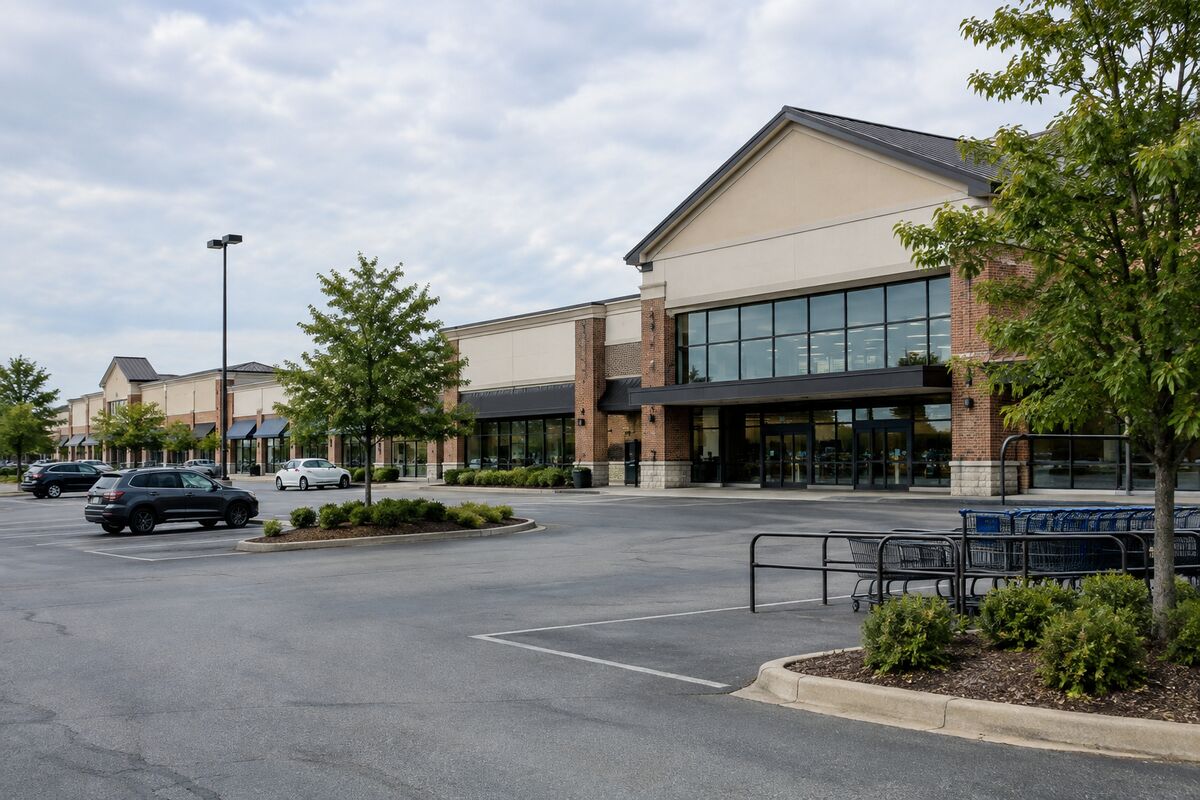
Commercial real estate consolidation is moving through the grocery aisle. Brixmor Property Group and Everview have agreed to acquire Slate Grocery REIT for $2.34 billion, placing one of North America’s most closely watched consumer-property niches under a brighter market spotlight.
The transaction matters beyond its headline value. Slate is a Canadian-listed real estate investment trust that owns U.S. grocery-anchored retail assets—a corner of the property market where weekly shopping habits meet the financial machinery of rents, cap rates and interest rates. As reported by Seeking Alpha, the agreed acquisition represents a major consolidation event for grocery-anchored retail real estate.
A bigger footprint in a defensive property niche
Grocery-anchored centers occupy an unusual position in commercial real estate. Their tenants are tied to routine consumer activity rather than occasional big-ticket purchases, making the properties a useful lens through which investors assess demand for consumer-linked real estate. That does not make the assets immune to economic pressure, but it does help explain why grocery-anchored portfolios command sustained attention.
With Brixmor Property Group and Everview moving to acquire Slate Grocery REIT, the sector is gaining a transaction that may reshape how investors view ownership scale. Consolidation can bring a larger collection of properties under fewer owners, potentially changing the competitive landscape for leasing, asset management and future portfolio decisions. The available information does not disclose additional transaction terms, financing details or any premium data, so the clearest signal is the size and strategic direction of the deal itself.
Why rates and cap rates remain central
The $2.34 billion price tag arrives as commercial real estate investors continue to monitor cap rates and the effects of the current interest-rate environment. Property values and transaction activity are closely linked to the cost of capital, while cap rates help investors frame the relationship between property income and asset valuation. When financing conditions are unsettled, even a sizable transaction can become a reference point for how the market is pricing established real estate portfolios.
That makes this acquisition a useful marker, though not a complete verdict on the retail property cycle. It shows that a major grocery-anchored portfolio can attract acquisition interest, but it does not by itself establish a new cap-rate benchmark or reveal how broader financing conditions may evolve. Those questions remain important for investors evaluating the outlook for retail assets.
The market takeaway
For the North American REIT landscape, the deal places three themes on the same page: consolidation, consumer demand and interest-rate sensitivity. Slate’s U.S. grocery-anchored assets connect a Canadian-listed REIT with the fundamentals of American retail property, while the proposed acquisition gives Brixmor Property Group and Everview a larger role in that segment.
The transaction may therefore be read as a sign that grocery-anchored real estate remains strategically relevant even while the market weighs cap rates and capital costs. But the evidence should be kept in proportion. Without reported share-price data, financing terms or premium details, the $2.34 billion agreement is best understood as a significant sector event—not a complete map of where retail property valuations go next.
Bull/Bear Verdict
Bull Case: The $2.34 billion acquisition may signal continued strategic interest in grocery-anchored retail assets and could reinforce consolidation in a consumer-linked property segment.
Bear Case: The deal remains exposed to the current interest-rate environment and cap-rate uncertainty, while the lack of disclosed financing and premium details limits what it indicates about broader retail REIT valuations.