
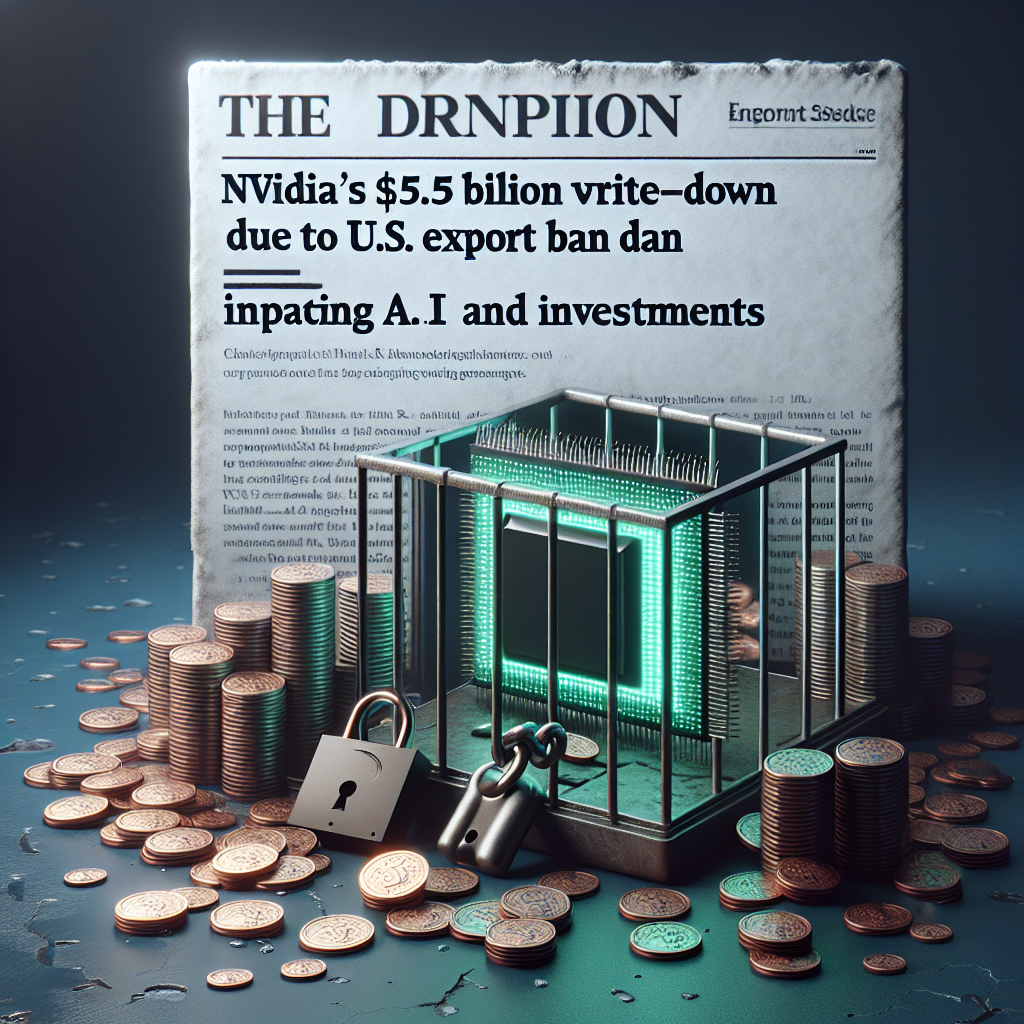
Nvidia Faces $5.5 Billion Write-Down Due to U.S. Export Ban on H20 Chip for China
In a significant development that has sent jitters through the trading floor, Nvidia Corporation (NVDA) revealed it anticipates a staggering $5.5 billion in charges during its fiscal first quarter, thanks to U.S. export restrictions on its much-touted H20 chips destined for the Chinese market. This is a critical moment for Nvidia, which has positioned itself as a leader in AI-driven chip technology.
What You Need to Know
According to a recent report by Dow Jones, Nvidia disclosed in a regulatory filing that the U.S. government has mandated an export license requirement for its H20 integrated circuits sold to China, including special administrative regions Hong Kong and Macau. This ruling is set to be in force indefinitely, and analysts are largely pessimistic about Nvidia securing such a license.
The implications are massive. Nvidia’s previous models, including the H20, were specifically designed to address U.S. national security concerns linked to the Chinese market. However, this new restriction marks a severe blow to the company’s revenue streams, particularly as Nvidia braced itself for potential fallout back in February. During that earnings call, Chief Financial Officer Colette Kress acknowledged that data-center sales to China had already dipped significantly compared to pre-export control levels.
Analyst Reactions: A Ceding of the AI Market?
The general consensus among analysts is bleak. D.A. Davidson’s Gil Luria mentioned that the write-down likely reflects the inventory value of H20 chips that will now gather dust rather than hit the Chinese market. Analyst Stacy Rasgon from Bernstein Research has characterized the possibility of an H20 chip ban as nonsensical, asserting that such a move merely hands the burgeoning Chinese AI market directly to competitors like Huawei.
This line of reasoning outlines the potential shift in market dynamics that could occur if Nvidia loses its foothold in China. In the past few years, sales to the region constituted about 13% of Nvidia’s total fiscal 2025 revenue—down from 17% in 2024 and peaking at 26% in 2022 before the introduction of export controls. This trend suggests that Nvidia’s lucrative business in China could evaporate almost entirely if the status quo persists.
The Immediate Impact on Stock and Revenue Forecasts
The immediate impact was felt almost instantly. Nvidia’s shares slumped 6.3% in after-hours trading, signaling a shift in investor sentiment that will likely lead to further revenue and earnings estimate cuts by Wall Street analysts on Wednesday morning. The company is on the precipice of not just a financial write-down but a significant strategic hurdle that could redefine its role in the semiconductor market.
Momentum Traders: What’s Next?
For momentum traders, signs of volatility are ripe. Market dynamics surrounding Nvidia may be shifting, and engaging early could yield profitable opportunities. If you’re looking to capitalize on fluctuations, keep a close eye on:
- Upcoming Earnings Release: Nvidia’s fiscal first quarter results will be released on April 27. This could provide insight into how the company is navigating through these tumultuous waters.
- Analyst Revisions: Watch for downgrades in earnings forecasts following analyst updates. A cascade of negative revisions may add more pressure to Nvidia’s stock price.
- China’s Response: Governments usually don’t act in a vacuum. Keep an eye on China’s countermeasures, which may further complicate relations and business operations for U.S. tech firms.
Conclusion: Time to Adapt
The essence of being a trend-following trader is to adapt swiftly to market shifts. With Nvidia’s turbulent road ahead portfolio consideration is crucial—make sure to follow the stock’s movement closely. If sentiment shifts due to government interventions or changes in market demand, will you be ready to act?
Monitor your positions, prepare for shake-ups, and remember, as seasoned traders say: Fortune favors the bold! This will be an interesting next few weeks for Nvidia and a critical time for traders who keep their fingers on the pulse of market trends.